



CMS says preliminary private payer weighted medians are approximately 16% below CY 2026 CLFS rates on average. The actual impact will vary materially by test mix, volume and Medicare utilization. For RCM and finance leaders, the priority is CPT® code-level modeling, not applying a flat 16% assumption to total laboratory revenue. CMS expects to publish the final CY 2027 rates in November 2026.
A New PAMA Rate-Setting Cycle Is Here
CMS released preliminary CY 2027 Clinical Laboratory Fee Schedule (CLFS) rates based on the second full PAMA private-payor data reporting cycle. The underlying data were collected for January–June 2025 and reported to CMS May 1–July 31, 2026. CMS uses reported private-payor rates and test volumes to calculate a weighted median for most clinical diagnostic laboratory tests. CMS estimates the new market-based rates would reduce Medicare laboratory spending by approximately $1 billion annually. Importantly, the preliminary weighted median is not the same as the final 2027 payment amount for every code: statutory protections limit a test’s reduction to no more than 15% per year in 2027, 2028 and 2029.

Where the Preliminary Pressure is Concentrated
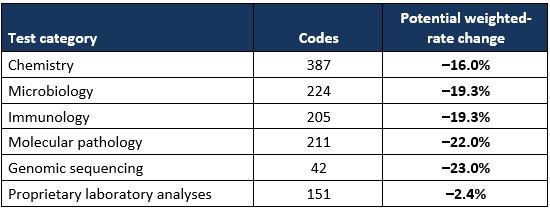
CMS reports the following potential weighted-rate changes compared with CY 2026:
Why this matters:
Laboratories with heavier molecular, genomic, microbiology or immunology utilization may experience a very different revenue impact than the overall CMS average. The appropriate analysis is CPT/HCPCS × volume × payer, not a single percentage applied across the enterprise.
A Broader Reporting Base, but Continued Methodology Debate:
CMS received data from 6,411 laboratory NPIs, up 230% from the 2017 reporting cycle. Hospital laboratory participation increased from 21 to 875 NPIs. The broader reporting base addresses one longstanding concern about representation, while laboratory organizations continue to debate whether PAMA’s market-based methodology adequately reflects the diversity and economics of the laboratory market. The preliminary 2027 rates have renewed attention on broader CLFS reform efforts, including the RESULTS Act and other proposals aimed at improving how market data is collected and used to establish Medicare laboratory payment rates.
From Rate Change to RCM Strategy
The 2027–2029 phase-in makes this a multi-year planning issue.

Illustrative phase-in concept only. The 15% figure is a statutory annual ceiling on reductions, not a prediction that every code will decline 15% in each year. Actual rates depend on the final weighted median and applicable statutory rules.
What Laboratories Should Do Now
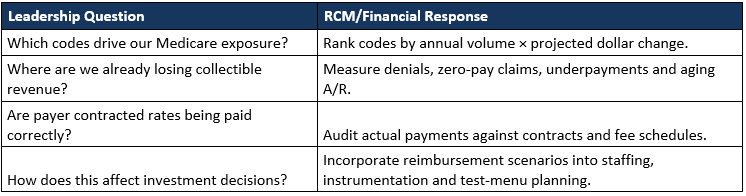
1. Build a code-level exposure model. Map preliminary 2027 rates to actual Medicare volume and reimbursement by CPT/HCPCS. Flag high-volume codes approaching the 15% ceiling.
2. Extend the model through 2029. Create base, downside and legislative-change scenarios so budgeting does not stop at January 2027.
3. Test revenue-cycle leakage. Review denials, zero-pay claims, underpayments, contractual adjustments and aging A/R. Lower unit reimbursement makes preventable leakage more consequential.
4. Review payer and test-menu economics. Compare reimbursement, utilization and contribution margin across Medicare, Medicaid and commercial payers, especially in molecular, genomic, microbiology and immunology testing.
Validate CMS data and consider commenting. Review preliminary medians and supporting data for material anomalies relevant to your organization. CMS is accepting comments through October 21, 2026.
To look up the Preliminary CY 2027 CLFS Rates by CPT code with projected reductions, click here.
1. Then navigate to CY 2027 Information
2. Click to download -> preliminary medians (ZIP)
RCM Performance Become More Valuable as Unit Reimbursement Tightens
When reimbursement declines, laboratories have less room to absorb avoidable revenue loss. Strong charge capture, accurate coding, clean claims, denial prevention, timely follow-up and contract payment validation become increasingly important. The question is not simply whether a claim was paid, but whether it was paid correctly.
Key Dates
October 21, 2026: CMS deadline for comments on the preliminary CY 2027 median data. Written comments can be submitted electronically to CMS’ CLFS dedicated email box:
CLFS_Annual_Public_Meeting@cms.hhs.gov
November 2026: CMS expects to publish final CY 2027 CLFS rates
January 1, 2027: Final CY 2027 rates take effect
APS Perspective
Laboratories should use the months before implementation to understand reimbursement exposure and strengthen the revenue cycle around it. The laboratory industry should also continue to closely monitor developments in Washington, as three potential outcomes remain: the new PAMA-based rates could take effect January 1, 2027; Congress could enact broader reform through the RESULTS Act; or lawmakers could again intervene to delay or modify scheduled reductions, as they have through prior legislation.
APS will continue monitoring final CLFS rates and related legislative developments so laboratory and pathology leaders can translate policy changes into practical financial and operational decisions.
CPT copyright 2025 American Medical Association. All rights reserved.
